Your website (probably) doesn’t need a chatbot
By Jameson Elder
The artificial intelligence race is accelerating. Every week brings new developments in coding, image generation and writing capabilities. Thousands of voices on LinkedIn are telling companies how they need to use AI. And now, you can even deploy agents to manage tasks across your business. So what’s a marketing lead to do?
Let’s take a step back and look at one domain. Your website.
In the race to “use AI,” there has been a dramatic increase in the number of chatbots on websites—friendly looking icons living in the bottom right corner of a site: “Hi, I’m [insert clever branded name here]. Ask me anything.” Some work better than others, but many are just site scrapers that surface content inside a chat window, offering little value to users.
In a world where there are already enough intrusive elements on your website (hello, cookie consent windows), an isolated chatbot is not the best place to explore AI on your website.
What are you looking for?
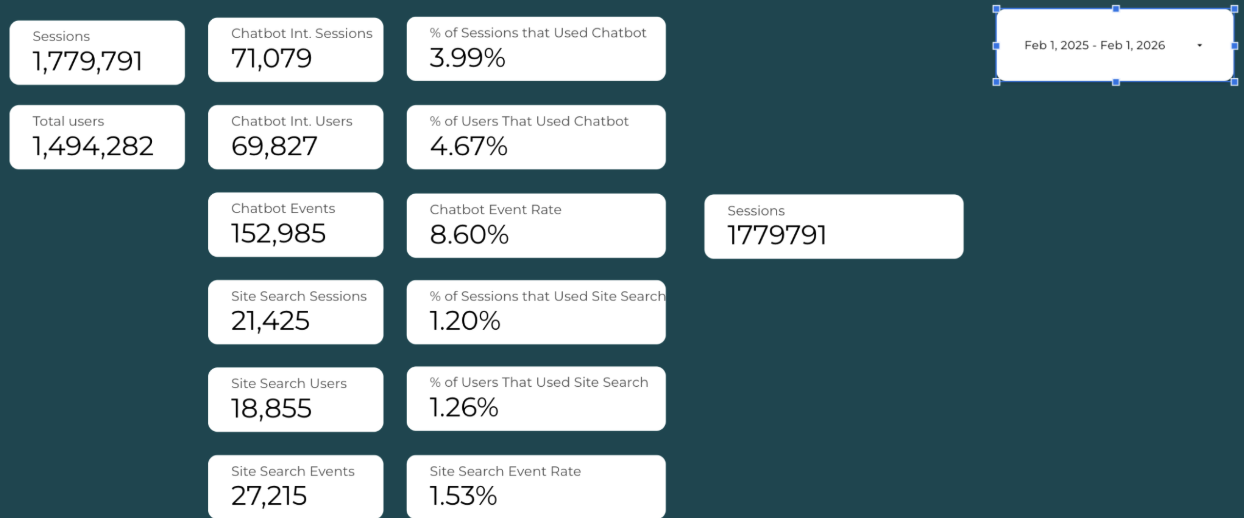
OBP recently evaluated a chatbot implementation and found that out of 1.5 million users, about 70,000 (4.7%) interacted with the chatbot. While that is a considerable number of users, we took a closer look at the quality of those chats with this core question: “Are users finding what they’re looking for?” The answer was a resounding “sometimes.” That “sometimes” can be detrimental to the trust a user places in a brand. In an analysis of 1,200 chat subscriptions, 18% of chats left users with a negative sentiment. “It’s your own website, and you can’t even give me the information I need” is a pretty tough barrier to overcome.
The goal of a chatbot is to get users the information they need quickly. If that’s not effective, what’s a better alternative?
In a recent survey of a client’s website, users revealed that site search was a major pain point. “I’m not seeing the results I’m looking for” was a common thread.
Site search can be tricky. You have to account for misspellings, synonyms and phrases that aren’t quite right. And your results are static. You search “restaurant,” and you get results with the word “restaurant.” If you’ve built your search well, you might get decent results for “restaurants,” “restaruant” or even “café” but it’s still limited. And if the user types more than a couple of words, you toss up a prayer and hope it works.
Sure, there are large-scale algorithms that have solved this problem (see Google, Yelp and Tripadvisor), and there are some really great tools out there (Algolia). But those require building elaborate systems that can be expensive.
If users are trying to find information, we should improve how they search—not add another interface.
A better solution
One of the coolest features of large language models is the way they connect words and phrases together. A well-trained AI model can identify what standard search cannot: user intent.
Enter natural language search.
Rather than surfacing results that match a string of keywords, AI can take the entire search in context and find content that is aligned with that intent, misspellings aside.
Most chatbot integrations scrape the front end of your site, which can be extremely limiting. At OBP, we tie AI in at the database level. Our search integrations aren’t just scraping the site for content; they have access to the database to see the categories, tags and relationship information that aren’t visible on the front end.
Let’s say you typed “free museums for families open on Sundays” in a search bar on a website. With standard search, that’s a lot of keywords to match, and my guess is you’ll only get a few results (if you’re lucky). With AI-powered natural language search, an AI model can parse all of that information together and surface results. And even better, you won’t have to interact with overly verbose, AI-generated responses. AI is the engine, but it doesn’t write the content.
This powerful approach allows us to surface high-quality results that are far more likely to get the user what they need, keeping them happy and moving forward to the next step in their journey.
As with any emerging technology, the question isn’t “How can we use this?”—it’s “How can we make this useful to our users?” Natural language search solves a key pain point for users and makes their overall interaction with your website more enjoyable.
OBP’s team of experts can help explore what that could look like for your company. To learn more, connect with us, and we can discuss what’s possible together.
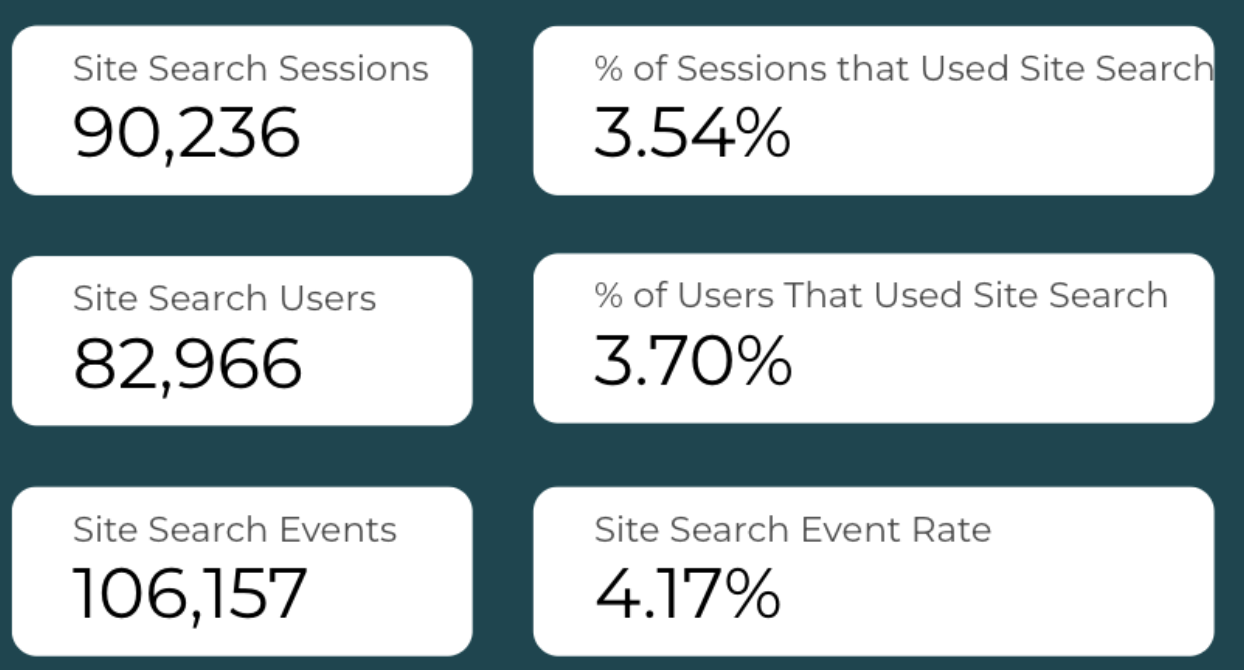
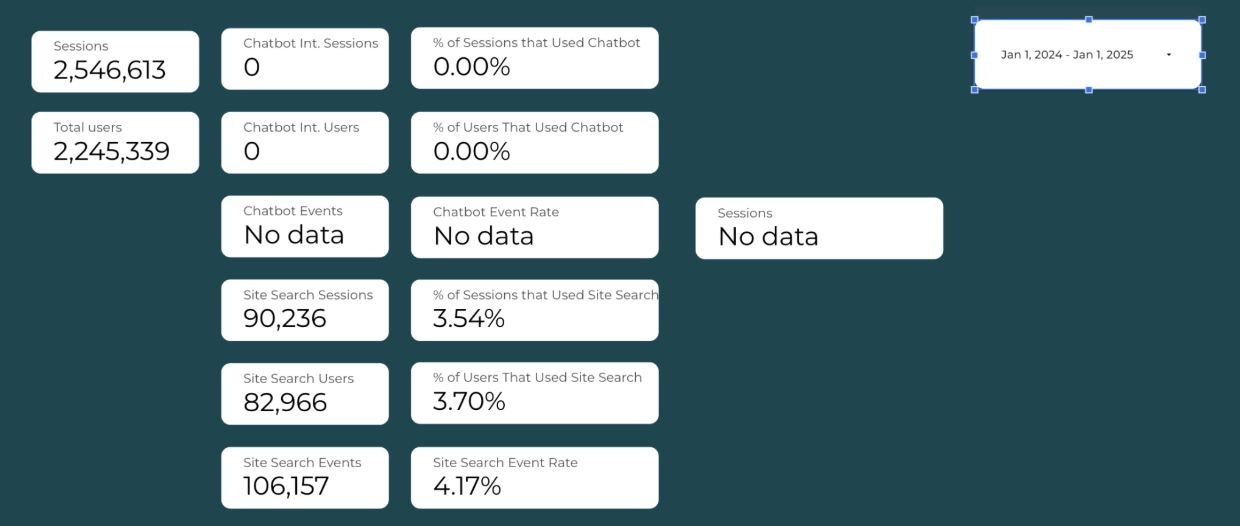
Stats:
Prior to chatbot