Measure the Business, Master the Magic
By Keyan Kenney
It’s November 1998. Somewhere in One Busch Place, a group of very smart, well-intentioned creatives is presenting ideas for their biggest campaign of the year. Among the concepts is what we now know to be one of the “winners” in every sense of the word: a spot that opens on a landline call (for younger audiences, imagine your phone is ALWAYS charging) and spirals into friends screaming “Whassup?!” at each other over the course of 60 seconds.
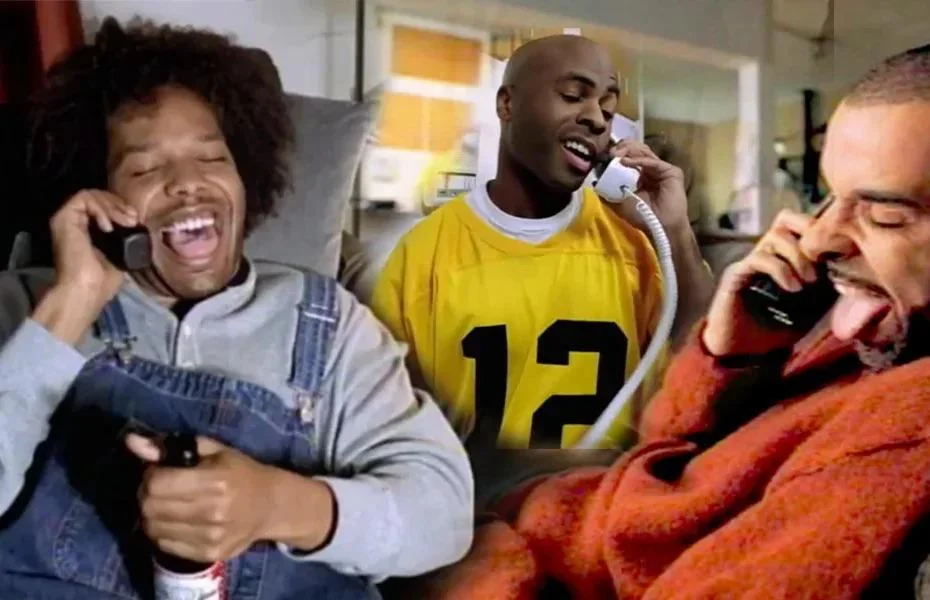
Genius in retrospect, but imagine the numbers person in the room counting how many times the brand name is heard or seen.* Checking for value props or features. Cold-filtered taste? Craft heritage? It doesn’t add up. And yet, that unhinged, simple idea didn’t just air—it exploded into a global cultural phenomenon that won at Cannes and defined an era of pop culture.
Creative intuition will always be a hard sell. If they could get away with it, most business leaders would prefer never to spend a single dollar on advertising. And if forced to, they’d want it to be as literal as possible: “WE MAKE A GREAT PRODUCT. HERE IS WHY YOU SHOULD BUY IT”(which is, the more I read it, the more I like it).
At the end of the day, businesses are built to generate revenue. Naturally, the people running them live in facts, metrics and predictable figures. To a finance-driven mindset, those of us who live in prose, color theory and narrative resonance can look a bit frivolous. Meanwhile, creatives often view executives as stuffy room-readers trying to turn every campaign into an algorithm. But regardless of the entry point, the exit always leads to the audience, and according to the wisdom of Rick Rubin, the second you craft a piece of work solely to appease an audience, you bleed out its vitality. Within our industry, that same thinking occurs whenever we allow raw metrics to steer the ship rather than act as a compass. The real lightning in a bottle flourishes exactly in the middle, in the narrow, electric space between business science and human culture. No ad is pure art, and no pure art is an ad. Advertising is the artistic application of the science of business. Good ads might tell you the features and benefits of a product, sure, but that’s rarely what makes them great. Great ads generate a visceral feeling.
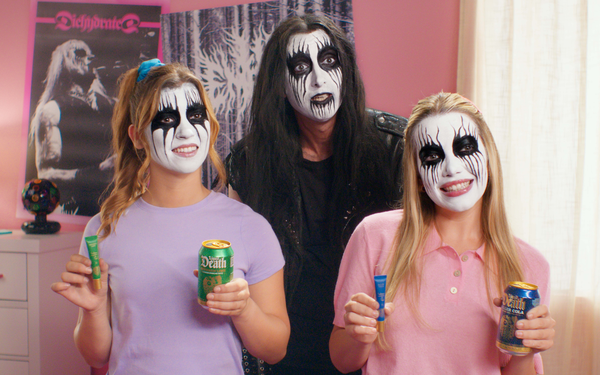
Look at modern breakthrough brands like Liquid Death. On paper, selling plain water in a beer can with a heavy metal aesthetic sounds like a terrible idea, but it works so well that even brands like e.l.f. and Taylor Morrison (America’s Most Trusted® Home Builder!) want in on the magic. CeraVe having Michael Cera “invent” their lotion sounds absurd on a spreadsheet. But underneath the joke was a rock-solid strategic truth: people already associated the actor with the brand. The creative intuition was choosing to lean into the meme rather than fight it. To a pure numbers mindset, these concepts look risky. In reality, they were exactly what was required to cut through the noise and capture the cultural mood.
When you over-index on performance data, pre-testing and micro-optimization, you optimize for the average. And now that generative AI can spit out a thousand banner-ad variations in seconds, micro-optimization is easier than ever. But algorithms can’t spot the human insight that creates an enduring brand. You build campaigns that get clicks from people who were already going to buy but strip away the exact thing that makes a brand unforgettable: its soul.
Data can tell you where your audience has been. It cannot tell you where their hearts are going. Creatives and business leaders actually have far more in common than they might think. At their core, they’re about solving complex problems in the best way they can. Different toolkits and different language, with ideally the same outcome: change perceptions and create preference.
Think of it like oil and vinegar. Separate, they’re opposing forces. One is dense and grounded; the other is sharp and volatile. But when you shake them together at high speed, you get a fantastic dressing that brings the whole salad to life. You need the cold, hard science of your business goals to give the creative a target. But once that target is set, you have to let creative intuition do what data simply cannot: make human beings feel something.
Want to transform your brand by blending strategy with unstoppable creative intuition? Let’s connect.
*Unless you count “a Bud,” the legal line or the 12 pixels that is the bottle, the end card is the only time the brand shows up.